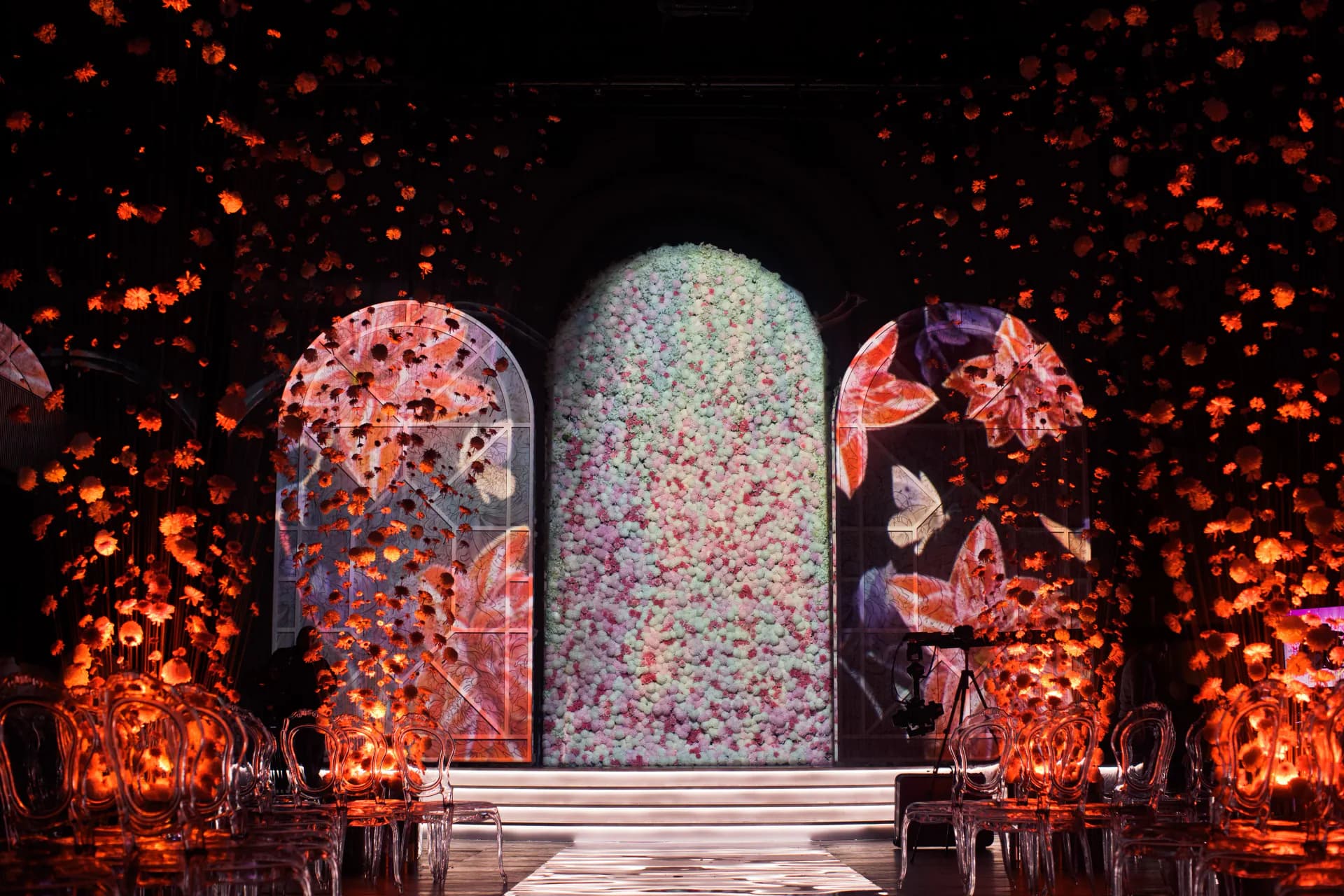
We have all been held hostage at a bad Sangeet night.
You know exactly what that feels like. You sit down at 8:00 PM at a beautifully decorated Sangeet venue in Jaipur. The couple's entry is delayed by 40 minutes. When the performances finally begin, you endure 18 consecutive amateur family dance routines with no breaks, no games, and no interaction from anyone on stage. The sound system causes a shrill feedback loop every 15 minutes. By 11:30 PM, the food is cold, people are checking their watches, and the DJ has not even opened the dance floor yet.
A Sangeet night should not feel like a 4-hour school talent show recital. It should feel like a high-energy, emotional, and deeply personal concert where your families are the rockstars.
As a professional Sangeet anchor in Jaipur, I have hosted over 450 Sangeet ceremonies across Rajasthan — from intimate farmhouse events to 800-guest ballroom spectacles at Fairmont Jaipur. The single biggest difference between a Sangeet that drags on painfully and a Sangeet that has the crowd screaming for "one more song" at 2:00 AM comes down to one thing: the architecture of the timeline.
Here is my exact, tested blueprint for managing family performance chaos and executing a flawless Sangeet night that your guests will talk about for years.
Phase 1: The Strategy (One Week Before)
More Sangets fail in the planning stage than on the actual night. Before I even arrive at the venue, I have multiple planning calls with the couple and their event manager:
- I collect the complete list of all confirmed performers and their estimated performance durations.
- I categorize performances into emotional tiers: Sacred/emotional performances first, high-energy friend performances later.
- I establish the "No Consecutive Performances" rule with the couple: Never more than three dances in a row without a crowd interaction break.
- I create a precise, minute-by-minute running order and share it with the DJ, the photographer, and the caterer.
Phase 2: The Pre-Game (7:30 PM - 8:30 PM)
The most common Sangeet mistake is launching the formal program the instant the first guests walk through the door.
The Reality: The first hour is always controlled chaos. Guests are getting drinks, navigating seating assignments, saying their hellos, and taking selfies at the photo booth. Sitting them down for performances at 7:45 PM means half your audience is still milling around the bar.
The Anchor's Approach: During this first hour, I am entirely off-stage. I roam the floor with a wireless microphone. I conduct quick, playful 45-second interviews with the bride's closest friends at their table. I introduce myself informally to the groom's extended family. I figure out who the naturally loud, energetic individuals are in the room — I will use them strategically later during the interactive segments. By 8:30 PM, the crowd already knows my voice, trusts my presence, and is physically settled with drinks and appetizers in hand.
Phase 3: The Explosive Opening (8:30 PM - 8:45 PM)
Do not open a Sangeet night with a low-energy classical dance or a background speech. You must shock the room into engaged attention immediately.
The Couple's Entry: High voltage, always. Whether it involves cold pyrotechnics, live dhols, or a coordinated flash mob with the entire bridal party, the grand entry sets the emotional benchmark for the next four hours. Work with your wedding planner to design something unexpected.
The Welcome Monologue: As the professional emcee, I drop a sharp, razor-focused 3-minute opening monologue. I establish the rules of engagement for the evening. I immediately generate a cheering competition between the bride's side and the groom's side of the room, spiking adrenaline levels across the hall within the first 90 seconds.
Phase 4: The 3-Block Performance Architecture (8:45 PM - 10:30 PM)
This is where amateur event planners and self-managed Sangets fail catastrophically: they schedule all 15 performances back-to-back in one exhausting continuous sequence. The human attention span simply cannot sustain active engagement through 15 back-to-back amateur dances.
The solution is the 3-Block Strategy.
Block A — The Emotional Opening (20 Minutes): Reserve the front slots for the performances that command the deepest respect and the most rapt attention. The grandparents' surprise dance. The mother's heartfelt solo tribute. The traditional Ghoomar. The crowd is fresh, fully settled, and their emotional receptiveness is at maximum. These performances generate genuine, spontaneous tears and standing ovations.
The Palate Cleanser (10 Minutes): Deliberately stop all performances. Kill the visual expectation. I step onto the stage and launch a high-energy interactive game directly involving the couple — a "Shoe Game" or a "Couple's Trivia Roast." This resets every person's attention span simultaneously. People are laughing, leaning forward, and talking to each other. The room is re-energized.
Block B — The High-Energy Friends Set (25 Minutes): Now the heavy beats drop. The bridesmaids, the groomsmen, the college batch squads. The performance energy shifts from "respectfully emotional" to "full nightclub." The crowd has fresh attention after the palate cleanser, so they are ready to genuinely hype and cheer for these groups.
The Mid-Point Recognition Break (10 Minutes): Another deliberate stop. I run a brief "Funny Awards Ceremony" — handing out pre-planned humorous recognitions to family members (Most Likely to Start Crying First, Best Improvised Dance Move, The Person Who Actually Rehearsed The Most). The crowd goes wild for this section every single time without exception.
Block C — The Couple's Final Statement (20 Minutes): The grand emotional finale of the formal performance program. The couple takes the stage for their curated solo performance. It ends with a massive, spontaneous group dance involving both immediate families simultaneously — symbolically uniting them before the DJ takes over.
Phase 5: The Dance Floor Transition (10:30 PM Onward)
This is the single hardest management challenge in any Sangeet. Getting conservative Indian guests who have been sitting in their chairs for 3 hours off their seats and onto a dance floor is a genuine psychological challenge.
If the DJ simply drops a track and I announce "Dance floor is open!" — nothing happens. People head directly to the buffet stations. The beautiful dance floor sits empty for 20 minutes.
The Anchor's Transition Technique: I never allow the final performance group to exit the stage. I jump directly into the crowd with my wireless microphone. I identify the youngest cousins, the most enthusiastic aunties, the most openly excited guests — and I physically walk them to the center of the floor on camera, building a live visible crowd. I coordinate a massive, highly structured "Dance Circle" while the DJ drops the biggest track of the evening.
Once a critical mass of 50+ people is actively dancing in the visible center, human social psychology takes over automatically. The floor stays packed until 2:00 AM without any further intervention needed.
Frequently Asked Questions (FAQ)
Q: How many dance performances is too many for a Jaipur Sangeet night? A: The absolute maximum for sustained crowd energy is 12 performances, and that requires the 3-Block Architecture described above with dedicated crowd interaction breaks between blocks. Beyond 12 performances in one evening, crowd fatigue overrules any amount of anchor energy.
Q: What is the ideal Sangeet start time for a Jaipur wedding? A: 7:30 PM for guest arrivals, with the formal program launching at 8:15-8:30 PM. This gives early-arriving guests time to settle while respecting that most guests in Jaipur will genuinely arrive between 7:45-8:00 PM.
Q: Should the Sangeet anchor use a script or improvise? A: Both. A strong base script with the exact running order, personalized couple details, and pre-planned game structures is essential. But the best event anchor layers live improvisation on top — reading the crowd's energy in real time and adjusting the pacing accordingly.
Q: What happens if a key performer is late or cancels on the night? A: This is precisely why you need a professional anchor — not your cousin's friend who "loves talking on the mic." An experienced wedding anchor from Jaipur has pre-planned contingency games for exactly this scenario. The audience will never know a performer was delayed or missed.
Q: Can you manage a bilingual Hindi and English Sangeet audience simultaneously? A: Absolutely. As a fully bilingual anchor, I run every game, every announcement, and every crowd interaction in the dominant language of that segment of the audience — switching fluidly based on who I am addressing at any given moment.
Do not let your family's months of dance rehearsals go to waste because of poor pacing and dead zones. Hand the microphone to a professional and let the evening conduct itself.
📞 Book Your Sangeet Anchor: +91 7737877978 🌐 Website: www.yashsoni.in